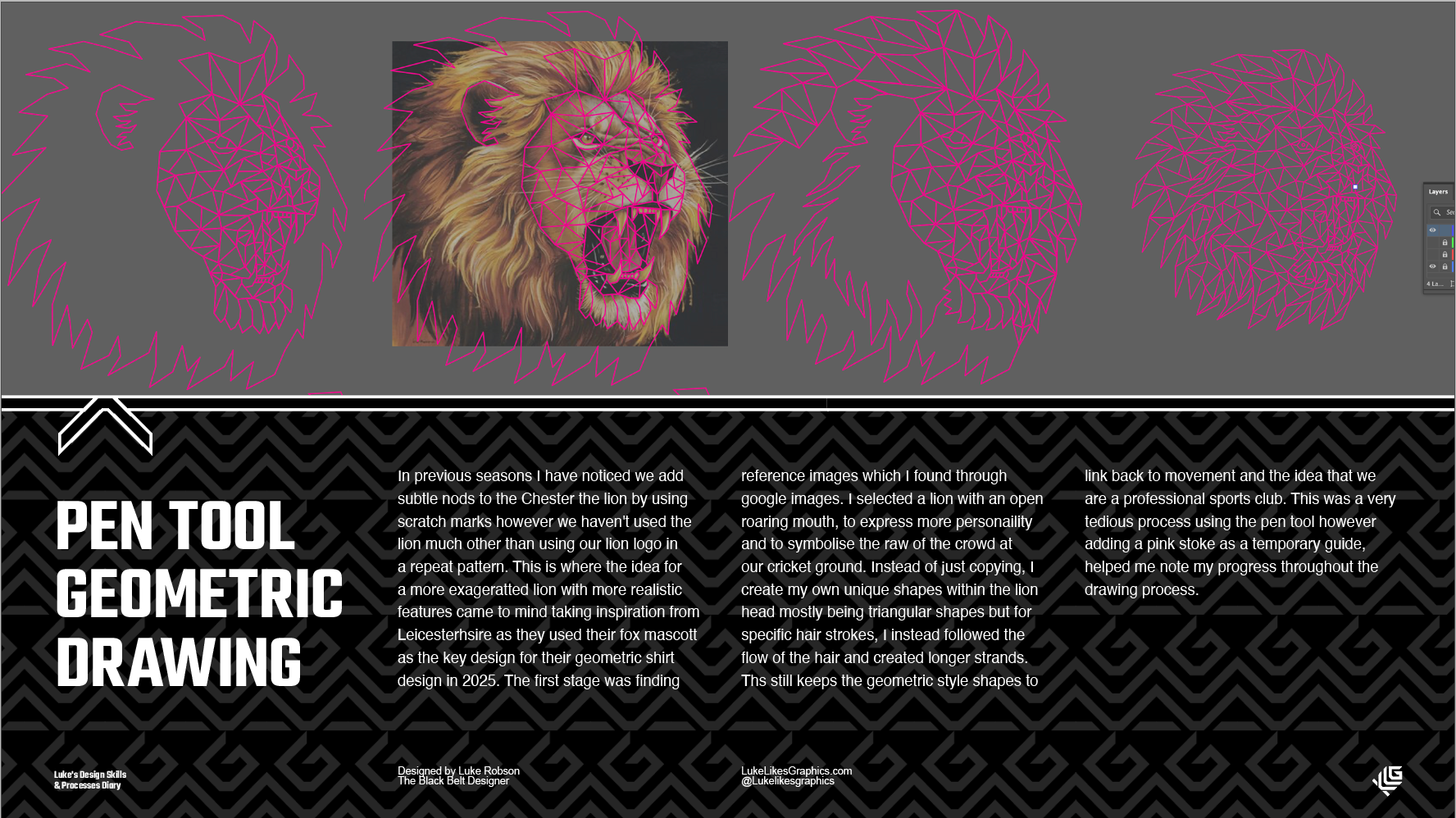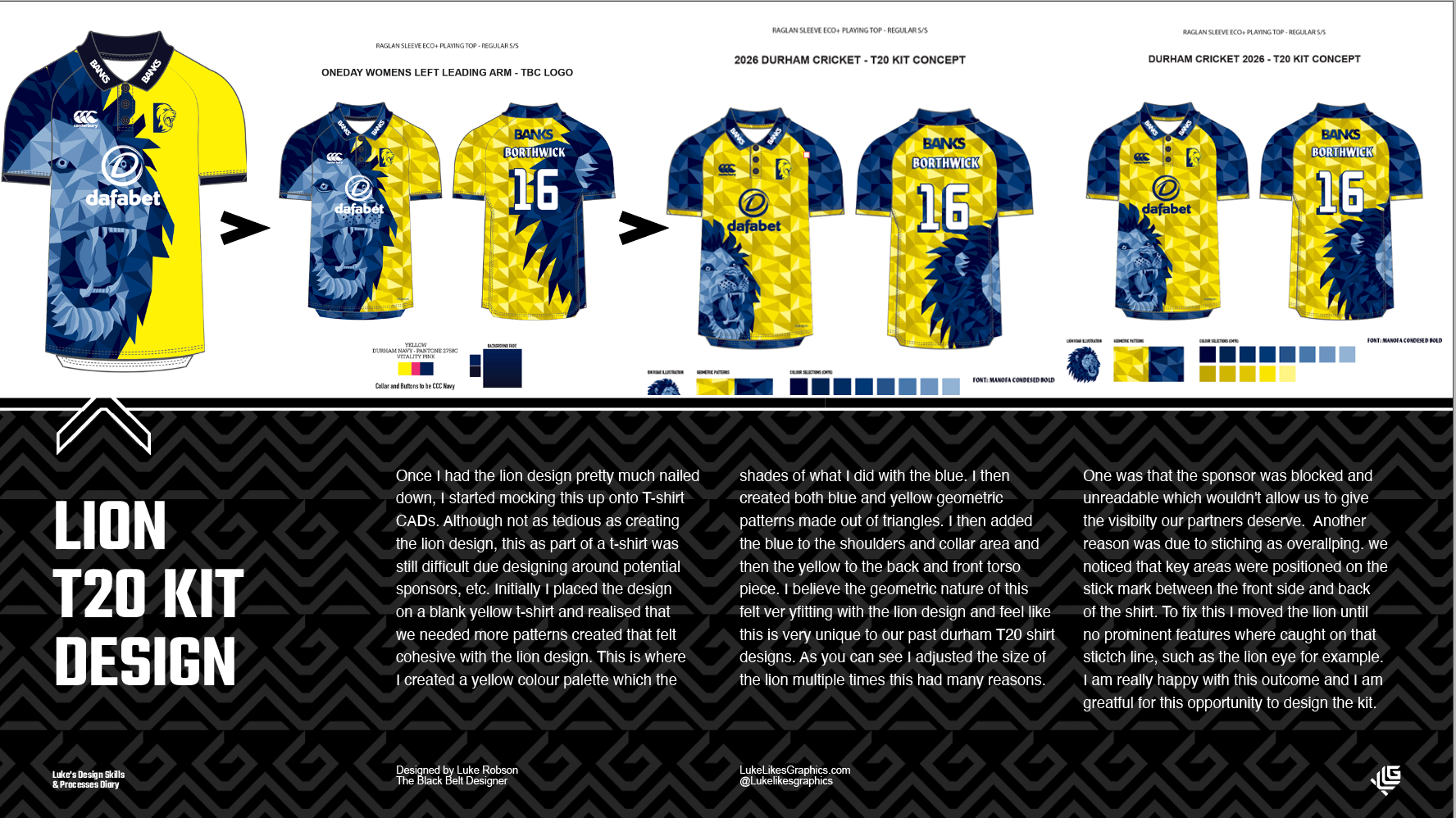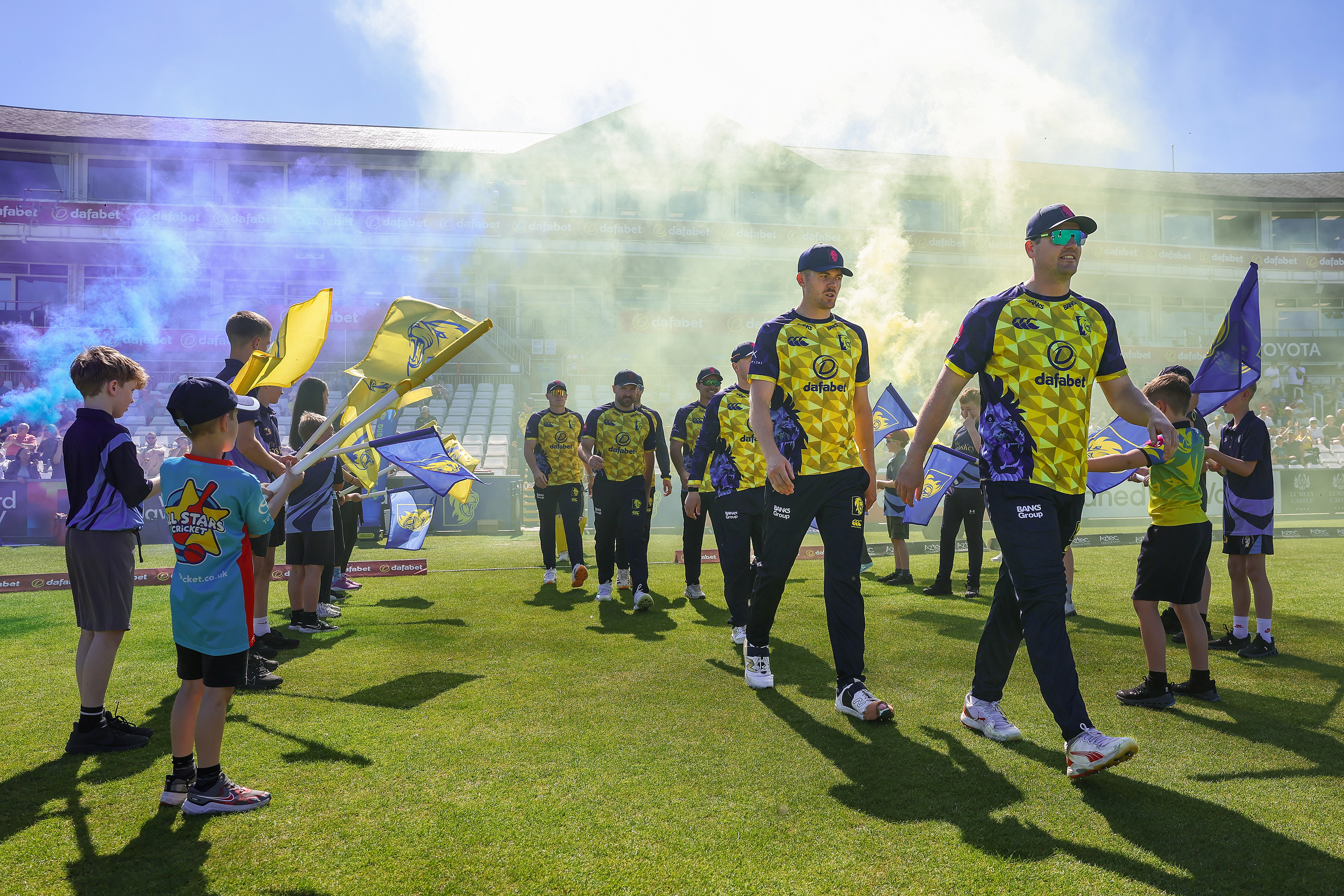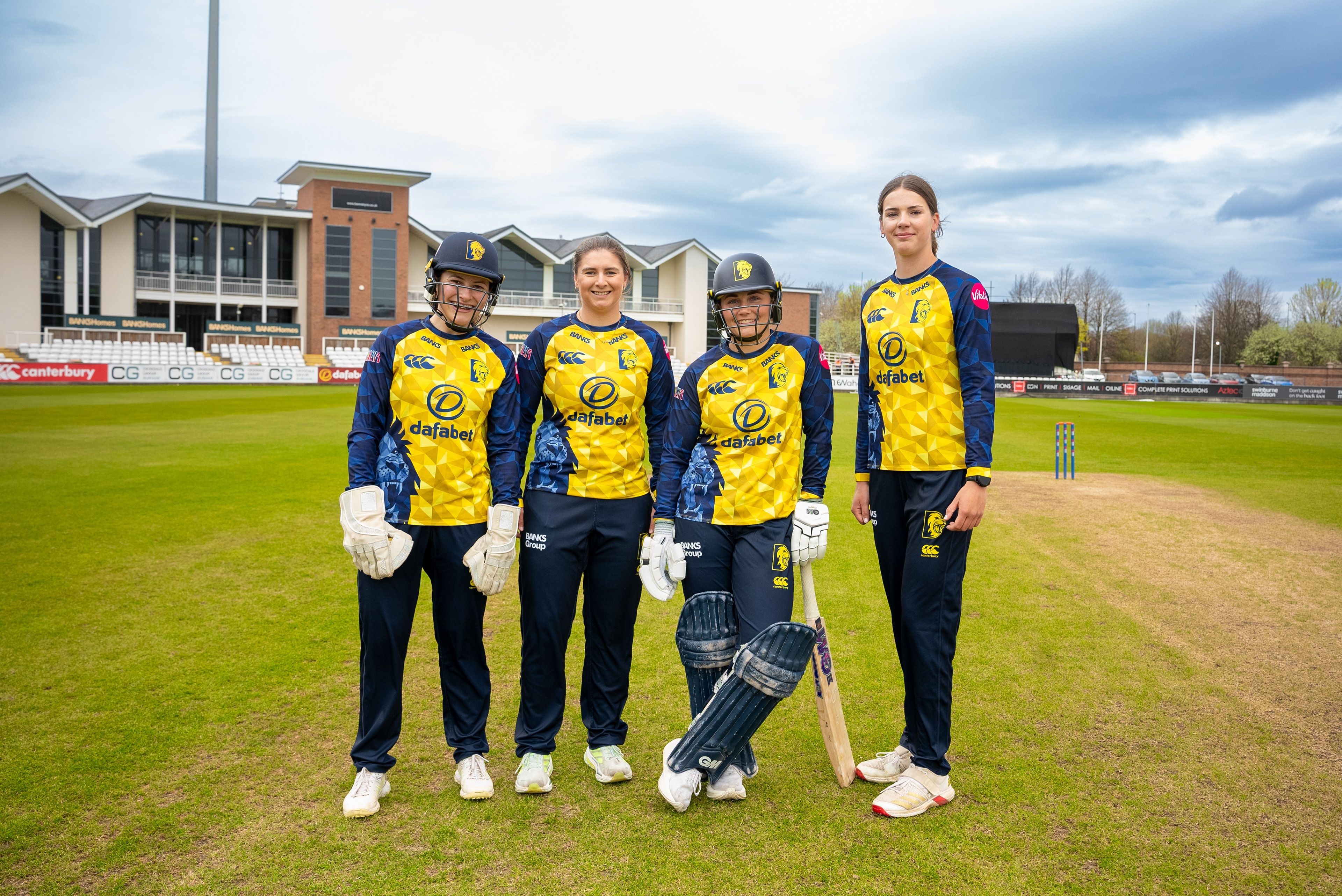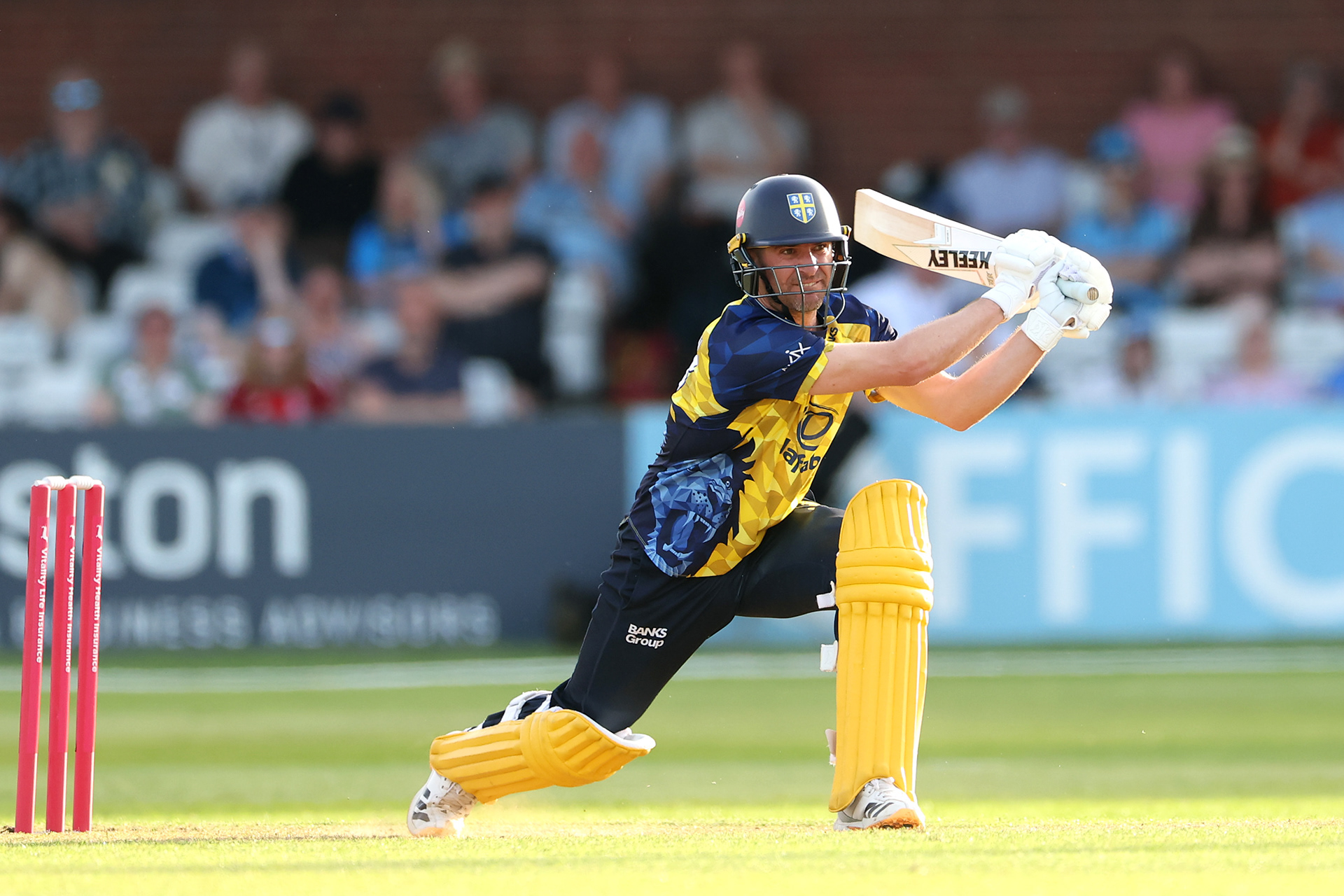
This season, I had the opportunity to design Durham Cricket’s T20 kit. This was a really exciting project because the T20 format has a much more energetic and entertainment-led feel compared to red ball cricket. Because of this, I wanted the kit to feel bold, powerful and instantly recognisable on the pitch.
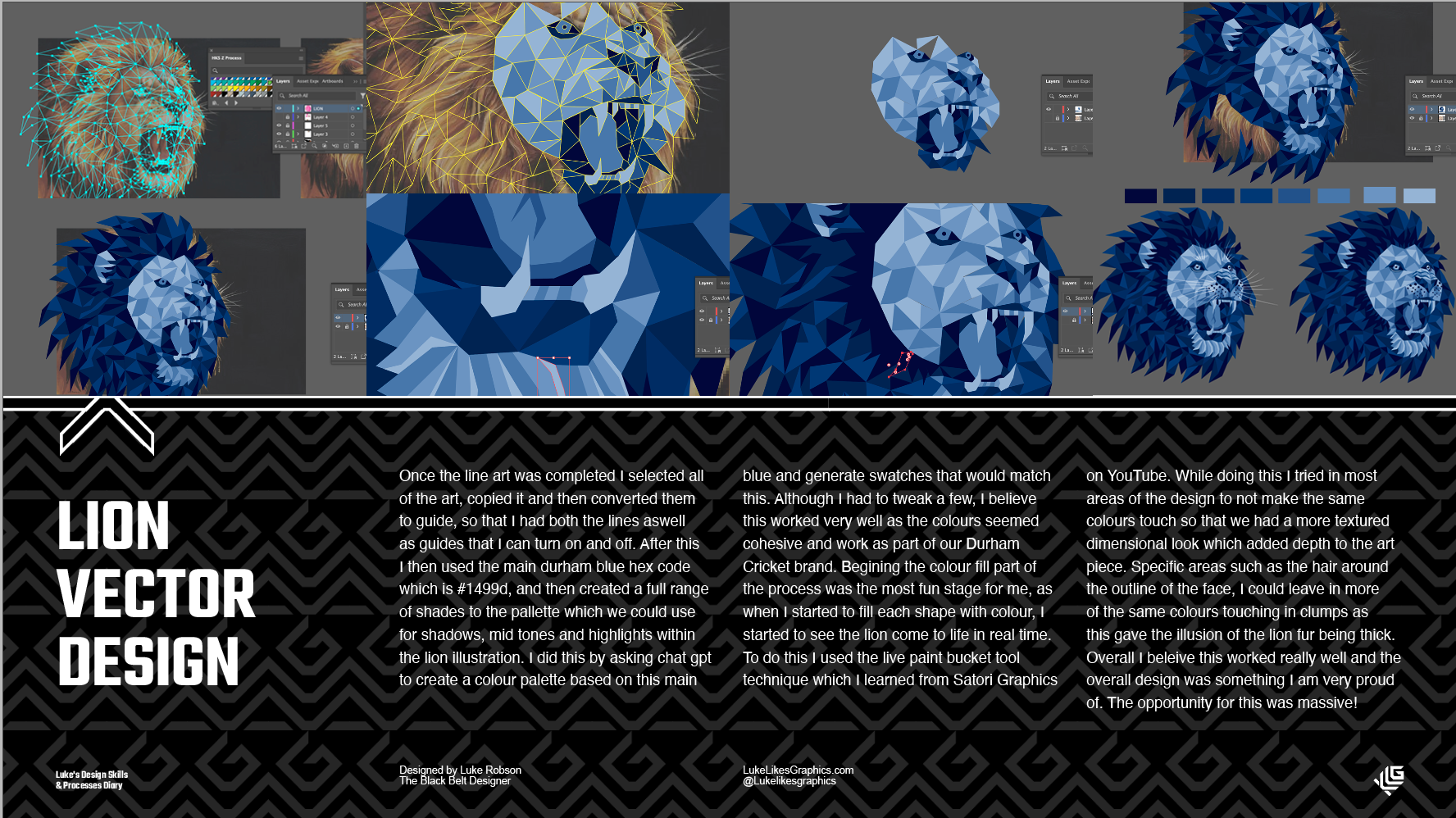
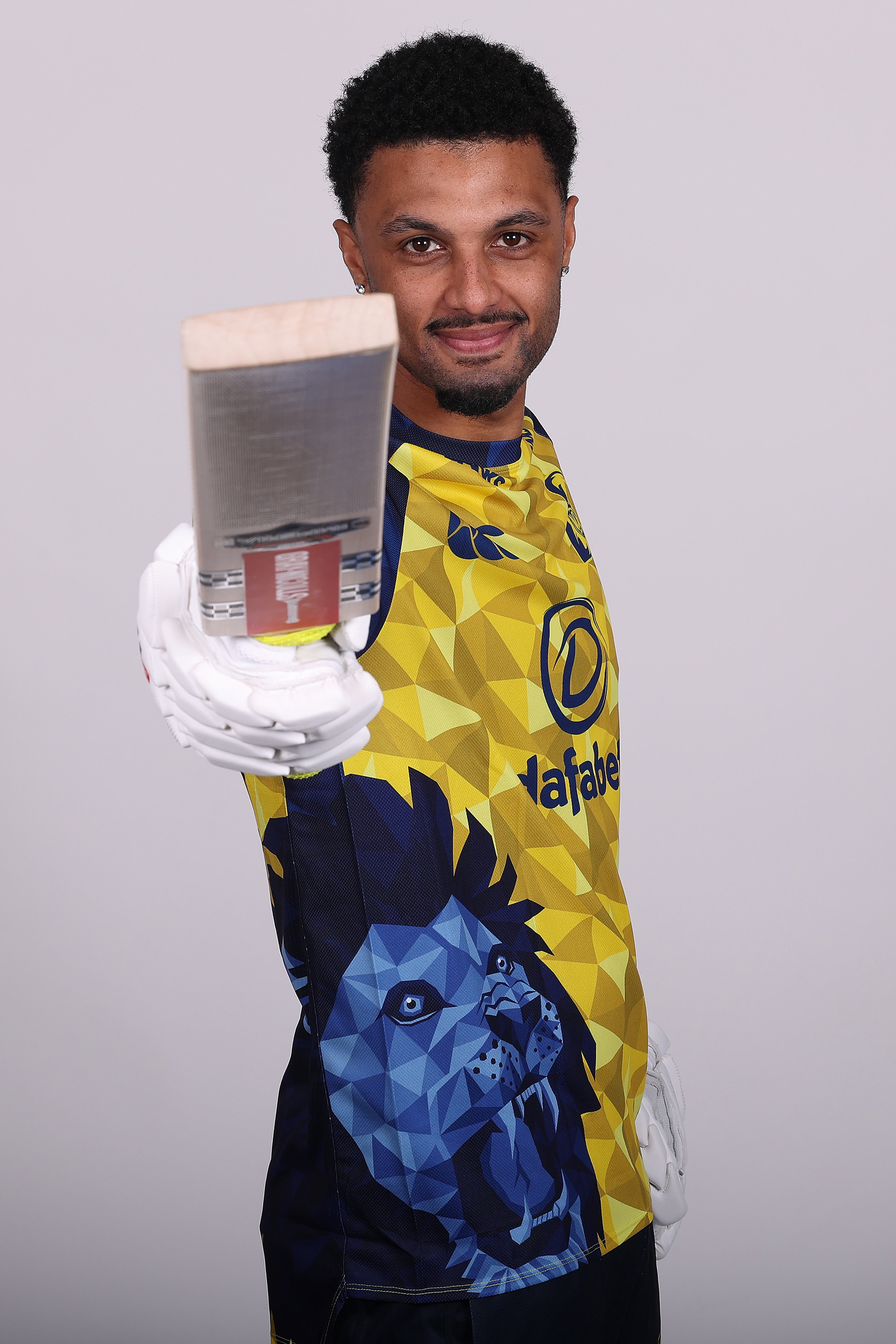
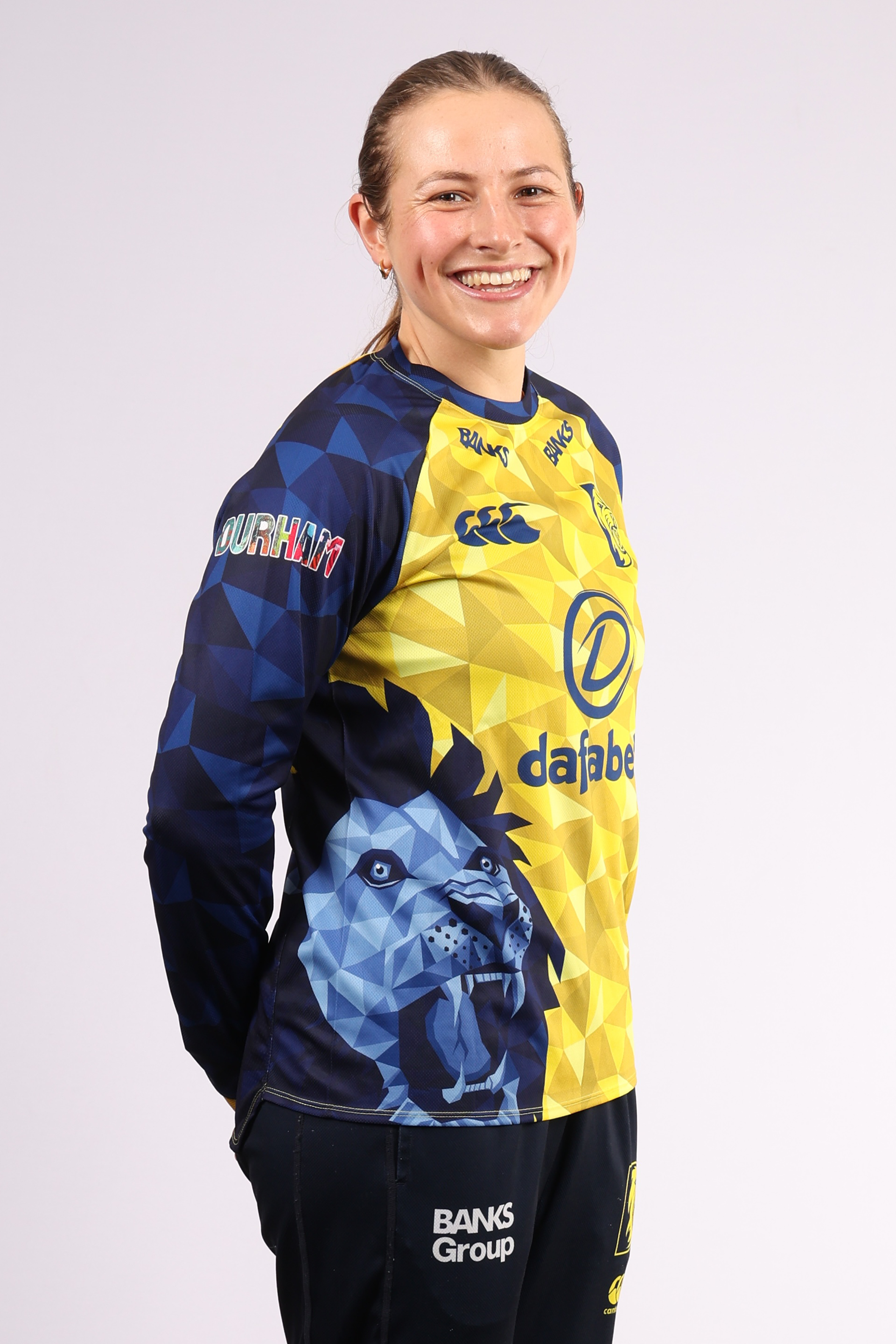
The main concept behind the design was a roaring lion. I wanted the pattern to express the energy, aggression and atmosphere of T20 cricket, while still feeling clearly connected to Durham. The lion is already a key part of the club’s identity, so using it as the foundation for the pattern helped the design feel meaningful rather than purely decorative.
I initially explored other Durham-related ideas, including visual inspiration from Lumley Castle, but this direction was eventually scrapped as it did not feel as strong as the roaring lion concept. However, this is something that could still be explored for a future kit or campaign, as it has potential to connect the design more closely to the local area.
The colour palette was generated from Durham’s original blue and yellow brand codes. From these base colours, I created lighter and darker variations to act as highlights and shadows within the pattern. This helped add more depth and movement to the design, rather than leaving the shirt as one flat block of colour. The extra variation also made the pattern feel more dynamic, which suited the fast-paced nature of T20 cricket.
Overall, I’m really proud of myself for this project and grateful for the opportunity I was given. Designing a real kit for a professional cricket club feels surreal, especially seeing how much this apprenticeship has opened up for me already. Seeing the kit appear on the news made the project feel even more real, as it showed that my work was not just being used internally, but was being seen by players, supporters and wider audiences. This project challenged me to think beyond a single graphic and consider how pattern, colour, symbolism and sporting context can work together in a full kit design.
This supports me in evidencing KSBs: K1, K2, K7, S1, S2, S4, S9, B1, B2, B4 and B5.